


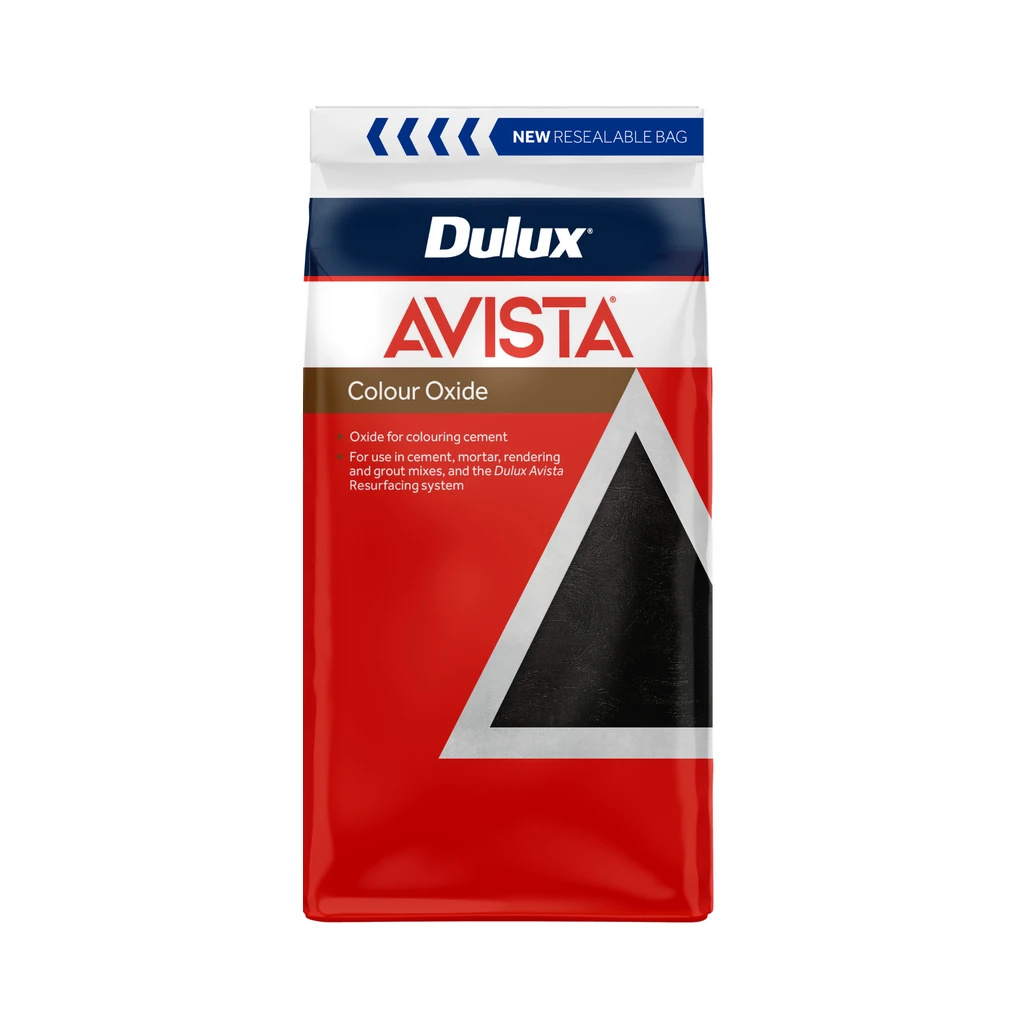
Dulux Avista Resurfacing Oxide 1KG
Dulux Avista Resurfacing Oxide 1KG
$19.98 – $31.49Price range: $19.98 through $31.49
Dulux Avista Resurfacing Oxide 1kg. Iron oxide pigment that colours the Avista Resurfacing Compound right through. 20 colours, UV-stable. One 1kg bag colours a 20kg bag of compound.
SKU
N/A
Category Concrete Sealers
SSL Protection
128 Bit SSL Certificate
Quick Shipping
Fast Shipping Australiawide
100% Satisfaction
We Put You First
The Full Kit
More Information
Overview
The Dulux Avista Resurfacing Oxide is a concentrated iron oxide pigment used to colour the Dulux Avista Resurfacing Compound. It is added during mixing so the colour runs through the full thickness of the overlay, not just on the surface. The range covers 20 colours, from earth tones to greys and terracotta shades.
The pigment is UV-stable and alkali-resistant, so the colour stays true in the alkaline environment of a cement based overlay and under Australian sun. One 1kg bag colours one 20kg bag of compound at the standard dosage, which makes dosing simple on a resurfacing job.
Key Features
- Concentrated iron oxide pigment for the Avista Resurfacing Compound
- Integral colour through the full overlay thickness
- Available in 20 colours
- UV-stable and alkali-resistant for long lasting colour
- One 1kg bag colours one 20kg bag of compound
- Mixed in during the gauging stage
Specifications
- Pack size: 1kg bag
- Pigment: synthetic iron oxide
- Dosage: one 1kg bag per 20kg bag of compound
- Colour range: 20 colours
- Resistance: UV-stable, alkali-resistant
Applications
- Colouring the Resurfacing Compound on driveways
- Integral colour for patios and paths
- Matching the compound to a Dulux Avista sealer colour
- Decorative resurfacing where a worn surface needs a fresh tone
What You Need to Complete the Job
Mix the oxide into the gauging water or dry mix before adding the Resurfacing Compound, then apply over the Resurfacing Primer. For small damage repairs before resurfacing, patch first with the Patch Repair Compound. Once the overlay is cured, seal it with a Dulux Avista concrete sealer from the Concrete Sealers range.
Frequently Asked Questions
How much oxide do I need for my resurfacing job?
One 1kg bag of oxide colours one 20kg bag of Resurfacing Compound at the standard dosage. Work out how many bags of compound your area needs, then order the same number of oxide bags in your chosen colour. Always mix a small test batch first to confirm the shade on your concrete.
Will the colour fade over time?
No. The oxide is a synthetic iron oxide pigment, which is chemically stable and does not fade under UV exposure. Because the colour runs through the full overlay thickness, normal surface wear does not expose an uncoloured layer underneath, which is the point of an integral colour system.
Can I mix oxide colours to get a custom shade?
Yes. Oxides can be blended to create custom tones. For a consistent result, pre-blend the dry oxides thoroughly before adding them to the mix, and keep a record of the ratios so you can match the shade for later batches. Test a small batch before the full job.
| Weight | N/A |
|---|---|
| Dimensions | N/A |
| Colour | Black, Bluestone, Granite, Brick Red, Charcoal, Chocolate, Chestnut, Dark Terracotta, French Grey, Gun Metal, Lite Mocha, Light Terracotta, Merino, Sandstone, Sandy Beige, Silver Sands, White, Bluegum, Slate Grey, Cream |
Related Products
Related products
-
 Concrete Sealers
AuSeaL 20lt Coloured Sealer
-
Concrete Sealers
PaveCoat AntiSlip Mix In
-
Concrete Sealers
Dulux Avista Pre-sealer 20L
-
Concrete Sealers
Dulux Avista Waterbased Epoxy PtB Hardener 5L