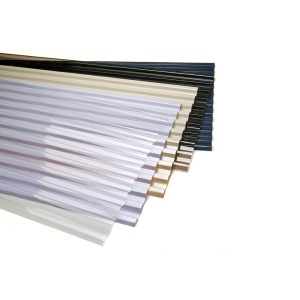


Laserlite Multiwall
Laserlite Multiwall
$65.68 – $424.26Price range: $65.68 through $424.26
Laserlite multiwall polycarbonate sheeting, 700mm or 1050mm widths, with a 15 year warranty against loss of light transmission.
SKU
N/A
Categories Polycarbonate Roofing, Laserlite Mutiwall
SSL Protection
128 Bit SSL Certificate
Quick Shipping
Fast Shipping Australiawide
100% Satisfaction
We Put You First
The Full Kit
More Information
Laserlite Multiwall Polycarbonate Roofing Sheet
The Laserlite Multiwall is a twinwall polycarbonate sheet with a proven track record for roofing and glazing projects that want light without the weight of glass. It is available in 700mm and 1050mm sheet widths, in clear, grey tint, bronze tint, opal and platinum, and is cut to length from 2.0m to 9.0m. It can be delivered Australia-wide or collected from our Truganina trade counter.
Multiwall sheet is built as a series of air-core channels between two skins. Those channels are what give it two advantages over a solid sheet: better insulation, because the trapped air slows heat transfer, and far lower weight, because the sheet uses less material. That makes it a sensible choice for large roof areas where a solid panel would be heavy to handle and expensive to support.
Laserlite Multiwall carries an industry leading 15 year warranty against loss of light transmission, which is the manufacturer’s commitment that the sheet will hold its clarity. The sheet is manufactured by PT Impack Pratama Industri TBK, a global maker of thermoformed polymers, and combines high impact resistance with the design flexibility to handle flat and gently curved installations.
Key Features
- Twinwall construction with insulating air-core channels
- 15 year warranty against loss of light transmission
- Excellent impact resistance, far stronger than glass
- Lightweight, easy to handle and support
- Available in 700mm or 1050mm widths
- Five colour options: clear, grey tint, bronze tint, opal, platinum
- Cut to length from 2.0m to 9.0m
- Superior clarity and structural integrity for glazing
Specifications
| Material | Twinwall polycarbonate |
| Sheet widths | 700mm or 1050mm |
| Lengths | 2.0m to 9.0m |
| Colours | Clear, grey tint, bronze tint, opal, platinum |
| Warranty | 15 years against loss of light transmission |
| Manufacturer | PT Impack Pratama Industri TBK |
| Sold by | Per sheet, cut to length |
Applications
- Skylights and roof glazing
- Verandas and pergolas
- Carports and walkways
- Greenhouses and nursery shelters
- Pool and spa enclosures
- Flat and gently curved roof structures
What You Need To Complete The Job
A multiwall roof needs the joining and edge profiles to work properly. Sheets are joined with the aluminium H bar, the exposed edges are finished with the edge bar, and the open flutes at the sheet ends are sealed with the Laserlite Multiwall Gasket End Cap. The sheets are fixed with One Shot timber screws for Laserlite. The full range of sheets and profiles is in the Laserlite Multiwall category, inside the wider Polycarbonate Roofing range.
Frequently Asked Questions
What is multiwall polycarbonate?
Multiwall polycarbonate is a sheet made of two skins connected by a series of parallel ribs, which creates air-core channels across the sheet. The trapped air improves insulation and the structure keeps the sheet rigid while using less material, so the panel is lighter than a solid sheet of the same size.
How much light does it let through?
That depends on the colour you choose. Clear lets through the most daylight, while grey tint, bronze tint, opal and platinum progressively reduce light and add glare and heat control. The 15 year warranty against loss of light transmission applies across the range.
Can Laserlite Multiwall be used on a curved roof?
Yes, within the manufacturer’s minimum bending radius for the sheet thickness. Multiwall sheet flexes enough for gentle curves used on curved verandas and walkways. For a tight radius, check the recommended radius for the sheet before installing.
What accessories do I need to install it?
You need the aluminium H bar to join sheets, the edge bar to finish exposed edges, and the gasket end cap to seal the open flutes at the sheet ends. The sheets are fixed with the One Shot timber screws designed for Laserlite. All of these are available in the Laserlite range at Singh Roofing Supplies.
Is multiwall sheet suitable for a full roof?
Yes. It is widely used for full roof areas on verandas, pergolas and carports, as well as for skylights and walkways. Because it is lighter than glass and easier to handle, larger roof areas are practical without a heavy supporting structure.
| Length | 2.0, 2.5, 3.0, 3.5, 4.0, 4.5, 5.0, 5.5, 6.0, 6.5, 7.0, 7.5, 8.0, 8.5, 9.0 |
|---|---|
| Standard Width | 1050mm, 700mm |
| Colour | bronze tint, Clear, Grey Tint, Opal, Platinum |
Related Products
Related products
-
Sale!
 Laserlite 3000
Laserlite 3000 Polycarbonate
-
Sale!Laserlite 2000
Laserlite 2000 Polycarbonate Roofing Sheet
-
Sale!Polycarbonate Accessories
EAVE INFILL STRIPS – 4 PACK BLACK GRECA
-
Sale!Polycarbonate Accessories
EAVE INFILL STRIPS – 4 PACK WHITE CORRUGATED