
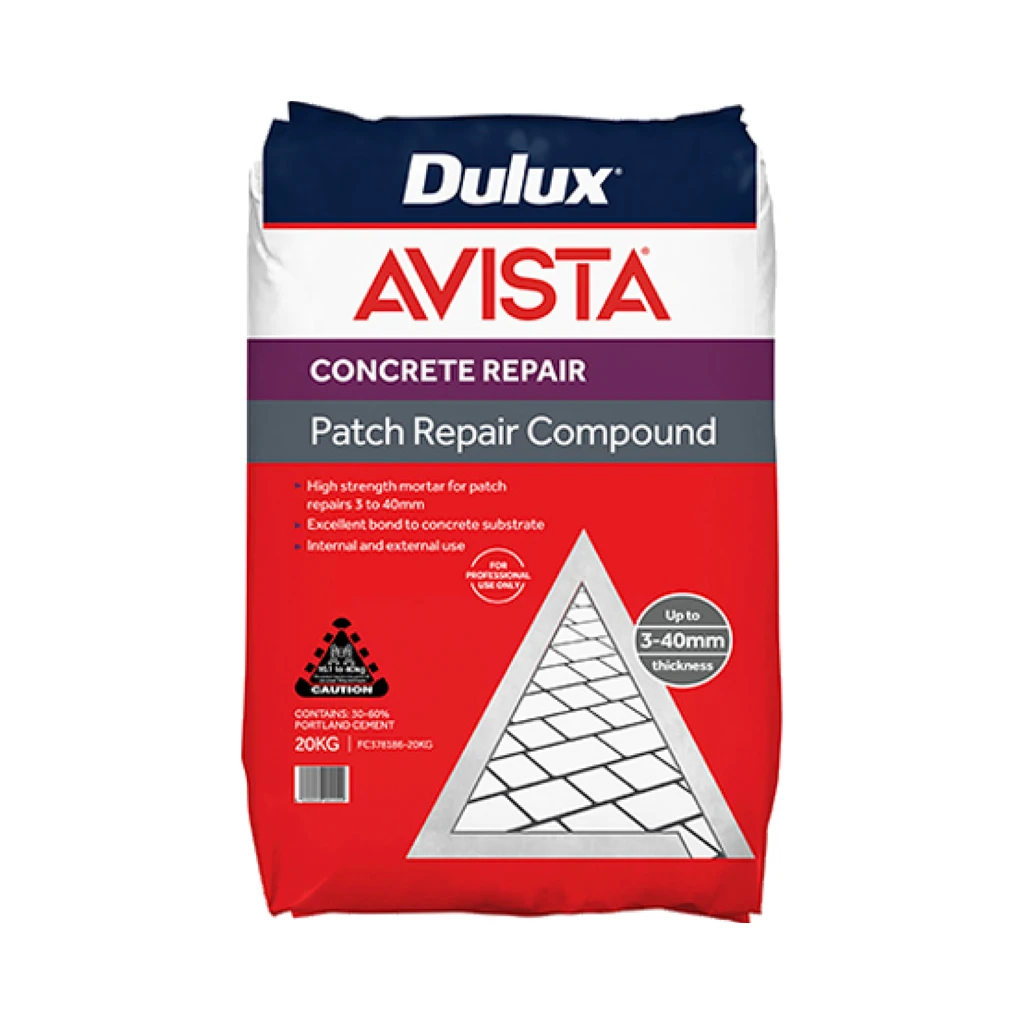
Dulux Avista Patch Repair Compound 20KG
Dulux Avista Patch Repair Compound 20KG
$52.00 – $56.00Price range: $52.00 through $56.00
Dulux Avista Patch Repair Compound 20kg. Polymer-modified mortar that fills spalls, holes and surface defects before resurfacing or sealing. Trowel applied, cures hard and takes coatings.
SKU
N/A
Category Concrete Sealers
SSL Protection
128 Bit SSL Certificate
Quick Shipping
Fast Shipping Australiawide
100% Satisfaction
We Put You First
The Full Kit
More Information
Overview
The Dulux Avista Patch Repair Compound is a polymer-modified cementitious repair mortar for filling spalls, holes and surface defects in concrete before resurfacing or sealing. It is trowel-applied to damaged areas and cures to a hard, durable finish that accepts the Dulux Avista sealer and coating systems.
Patch repairs are the step that makes a resurfacing or sealing job last. If a spall or hole is left unfilled, it telegraphs through the new coating and traps water under it. The Patch Repair Compound fills the damage flush so the overlay or sealer goes onto a sound, level surface.
Key Features
- Polymer-modified repair mortar for concrete spalls and holes
- Trowel-applied and cures to a hard finish
- Accepts Dulux Avista sealers and coatings once cured
- Compatible with the full Avista concrete coating system
- Use before resurfacing or sealing damaged concrete
- 20kg bag for repair and prep work
Specifications
- Pack size: 20kg bag
- Type: polymer-modified cementitious repair mortar
- Application: trowel
- Overcoat: accepts Dulux Avista sealers and coatings
- Use: fill spalls, holes and surface defects before coating
Applications
- Filling spalls and chips in driveways before sealing
- Repairing holes in paths and patios before resurfacing
- Leveling damaged concrete before an epoxy or sealer coat
- Repair work ahead of the Avista resurfacing system
What You Need to Complete the Job
Trowel the patch compound into clean, sound damage and let it cure, then continue with the coating plan. On a full resurfacing job, prime with the Resurfacing Primer and overlay with the Resurfacing Compound. For hairline cracks rather than spalls, use the Epoxy Concrete Crack Repair first. Coatings are in the Concrete Sealers range.
Frequently Asked Questions
Can I patch over a damp or wet surface?
No. The repair compound needs a clean, sound, dry substrate to bond. Patch repairs made over damp concrete will not cure properly and can fail under the new coating. Dry the area thoroughly before applying the mortar, and avoid patching if there is water coming up through the slab.
How long before I can coat over the patch?
Let the patch compound cure fully before applying a sealer or coating. The cure time depends on temperature and humidity, so follow the product data sheet and check the patch is hard and dry before you overcoat it. Rushing this step can cause the coating to fail over the repair.
What is the difference between this and the Resurfacing Compound?
The Patch Repair Compound is a repair mortar for filling isolated damage, while the Resurfacing Compound is a full-surface overlay. For a worn driveway with a few spalls, patch the damage first, then resurface the whole area for a uniform finish. For light damage, patching and sealing may be enough on its own.
| Weight | N/A |
|---|---|
| Dimensions | N/A |
| Aggregate Size | 0-10mm, 3-40mm |
Related Products
Related products
-
 Concrete Sealers
AuSeaL 20lt Coloured Sealer
-
Concrete Sealers
Dulux Avista Exposed Aggregate Surface Retarder 20L
-
Concrete Sealers
Dulux Avista Solvent Based Rejuvenator 15L *New*
-
Concrete Sealers
Dulux Avista Waterbased Tintable Sealer Base 15L