
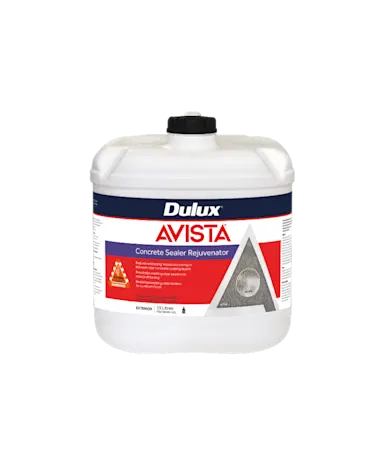
Dulux Avista Solvent Based Rejuvenator 15L *New*
Dulux Avista Solvent Based Rejuvenator 15L *New*
$298.00
Dulux Avista Solvent Based Rejuvenator 15L. A treatment that restores clarity to aged solvent-based acrylic sealers by re-flowing the film, fixing whitening and milky haze without stripping.
SSL Protection
128 Bit SSL Certificate
Quick Shipping
Fast Shipping Australiawide
100% Satisfaction
We Put You First
The Full Kit
More Information
Overview
The Dulux Avista Solvent Based Rejuvenator is a specialised treatment for the whitening, milky haze and clouding that develop between clear concrete sealer layers over time. It penetrates and re-flows aged solvent-based acrylic sealers, restoring clarity and uniformity without a full strip and reseal.
The rejuvenator re-wets the sealer film and lets trapped moisture escape, which is the common cause of that cloudy, patchy look on older sealed concrete. It is a maintenance product for pavers, stamped, stencilled, coloured and exposed aggregate concrete previously sealed with a clear solvent-based acrylic sealer.
Key Features
- Reduces whitening and milky haze between clear sealer coats
- Restores clarity to aged solvent-based acrylic sealers
- Extends sealer life, delaying a full strip and reseal
- Applied by air spray or broom, no special equipment
- For pavers, stamped, stencilled, coloured and exposed aggregate concrete
- Not for water-based, alkyd, epoxy or polyurethane coatings
Specifications
- Pack size: 15L
- Application: air spray or solvent-resistant broom
- Dwell: 10 minutes or more, then work in for 30 to 60 seconds
- Cure: 3 to 5 days for the treatment to take effect
- Recoat: wait 4 to 6 weeks before applying a new sealer coat
- Use: external concrete surfaces only
Applications
- Fixing whitening on sealed driveways
- Restoring clarity to hazy pavers
- Treating cloudy stamped and stencilled concrete
- Refreshing aged coloured and exposed aggregate concrete
What You Need to Complete the Job
Test a small area first, apply the rejuvenator evenly and work it in with a broom, then allow 3 to 5 days for the treatment to take effect. If haze persists, a second application may be needed. Recoat with a fresh Dulux Avista sealer such as the General Purpose Matt only after the 4 to 6 week wait. For failed or peeling sealer, use the Sealer Stripper instead. Sealers are in the Concrete Sealers range.
Frequently Asked Questions
What causes the white, cloudy appearance on sealed concrete?
The milky haze, often called blushing, is usually moisture trapped between sealer layers during application. It happens when sealer is applied too thickly, recoated before the previous coat is dry, applied in high humidity, or over concrete with residual moisture. The rejuvenator re-wets the film and lets the trapped moisture escape.
Can I use this on any brand of concrete sealer?
The rejuvenator is formulated for Dulux Avista clear solvent-based acrylic sealers. It may not be effective, and could react badly, on other brands or on water-based, alkyd, epoxy or polyurethane coatings. If you are unsure what is on the concrete, test a small hidden area first.
How long before I can reseal after treatment?
Wait a minimum of 4 to 6 weeks before applying a new coat of sealer. This lets all solvents from the rejuvenator fully evaporate. Rushing the recoat can trap residual solvent under the new sealer and cause the same whitening you are trying to fix.
Is the rejuvenator a substitute for stripping and resealing?
Not always. It is a first-line treatment for whitening and haze and will often restore clarity and extend the sealer life by years. If the sealer is peeling, delaminating or badly worn, rejuvenation cannot fix structural failure, and stripping and resealing remains the correct course.
Related Products
Related products
-
 Concrete Sealers
AuSeaL 20lt Coloured Sealer
-
Concrete Sealers
Dulux Avista Water Based Penetrating Sealer
-
Concrete Sealers
Dulux Avista High Solids Epoxy Resin Part A 6L
-
Concrete Sealers
Dulux Avista High Solids Epoxy Hardener Part B 4L