

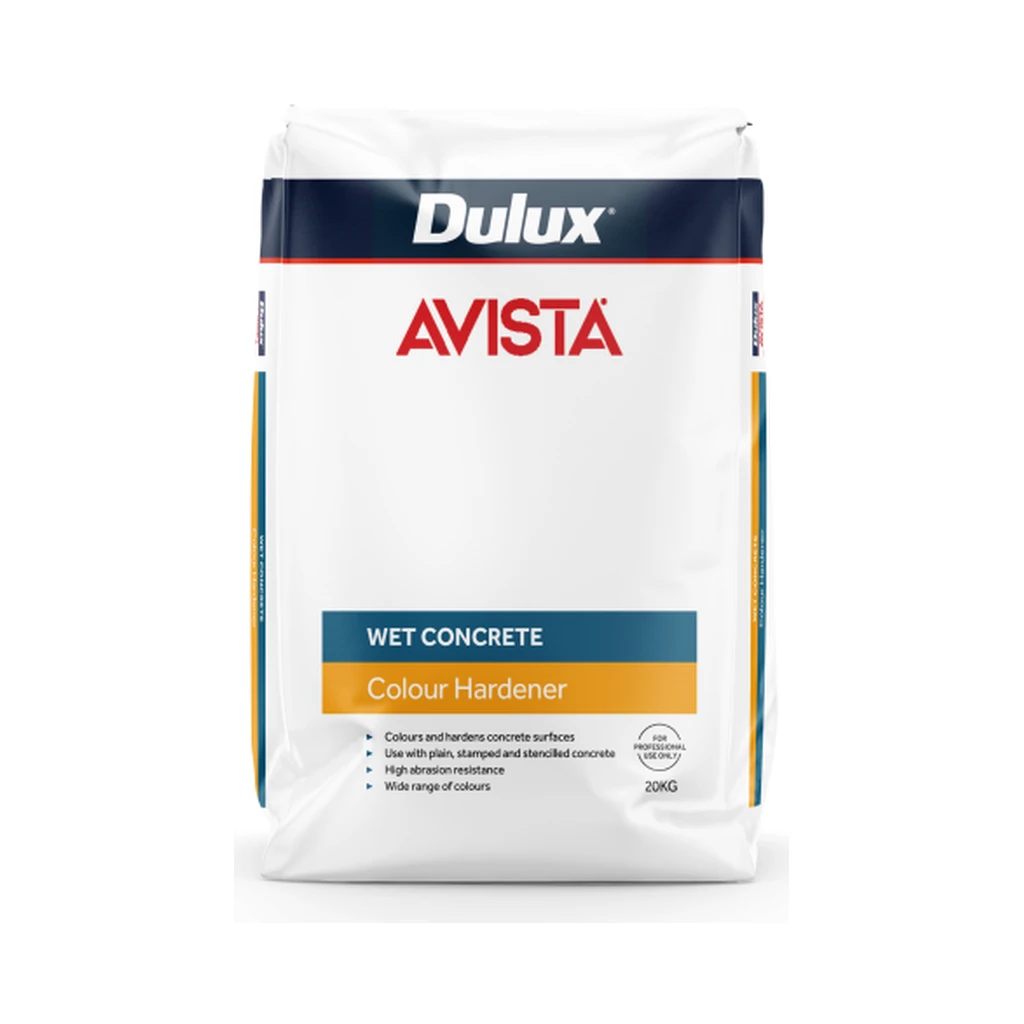
Dulux Avista Colour Hardener 20KG
Dulux Avista Colour Hardener 20KG
$39.00
Dulux Avista Colour Hardener 20kg. Dry-shake colour hardener that densifies and colours fresh concrete in one pass. Used with the Avista stamping and stencilling range.
SKU
N/A
Category Concrete Sealers
SSL Protection
128 Bit SSL Certificate
Quick Shipping
Fast Shipping Australiawide
100% Satisfaction
We Put You First
The Full Kit
More Information
Overview
The Dulux Avista Colour Hardener is a dry-shake colour hardener broadcast onto fresh concrete and trowelled into the surface. It densifies and colours the top layer of the slab in one pass, producing a hard-wearing, UV-stable coloured surface that suits the stamped and stencilled concrete process.
It works as the colour step in decorative concrete: the hardener is spread evenly over the fresh slab after screeding, worked into the surface with a float, and then patterned with stamps or stencils. The result is a coloured, densified surface that resists wear and weather, finished with a Dulux Avista sealer.
Key Features
- Dry-shake colour hardener for fresh concrete
- Densifies and colours the surface in one pass
- UV-stable colour for exterior decorative concrete
- Used in the stamped and stencilled concrete process
- Range of colours to match the Avista sealer range
- 20kg bag for driveway and patio jobs
Specifications
- Pack size: 20kg bag
- Type: dry-shake colour hardener
- Application: broadcast onto fresh concrete, trowelled in
- Colour: UV-stable range of shades
- System use: stamping and stencilling with release agent and sealer
Applications
- Colouring stamped concrete driveways
- Stencilled concrete patios and paths
- Coloured slab edges and borders with a contrasting shade
- Decorative concrete finished with a clear sealer
What You Need to Complete the Job
Broadcast the colour hardener over the fresh slab and trowel it in, then pattern the surface. Use a Stencil 100M for a grout-line pattern or stamps for texture, with a Release Agent Powder to stop the mats sticking. Frame the field with a Header Course border, then seal with a Dulux Avista concrete sealer from the Concrete Sealers range.
Frequently Asked Questions
When do I apply the colour hardener?
Apply it after the concrete has been placed, screeded and floated, while the surface still has enough moisture to take the hardener but before it sets. Spread the dry-shake evenly by hand or with a broadcast spreader, then trowel it into the surface. Working at the right time is what gives an even colour.
How much colour hardener do I need?
The application rate depends on the colour intensity you want and the finish method. Work from the coverage stated on the pack for your chosen colour and order a little extra for waste and edges. As a rule, heavier application gives a deeper, denser colour.
Can I use a contrasting colour for borders?
Yes. A common finish is a main field in one shade with a contrasting border or header course in another. The two colours are applied separately, with the border masked or stencilled off before the second shade goes down. This is how the Header Course 100M and border detailing are done.
| Weight | N/A |
|---|---|
| Colour | Jet Black, Bluestone, Brick Red, Charcoal, Chestnut, Dark Terracotta, Desert Sand, French Grey, Gunmetal, Light Terracotta, Lite Mocha, Merino, Sandstone, Sandy Beige, Slate Grey |
Related Products
Related products
-
 Concrete Sealers
Auseal solvent
-
Sale!Concrete Sealers
Dulux Avista Coloured Concrete Sealer 20L
-
Concrete Sealers
Dulux Avista Sealer Tintable Base 19L
-
Concrete Sealers
Dulux Avista Waterbased Epoxy PtB Hardener 5L