

SUNGLAZE 4mm Solar Ice – 25% Light Transfer
SUNGLAZE 4mm Solar Ice – 25% Light Transfer
$160.51 – $1,444.61Price range: $160.51 through $1,444.61
Sunglaze 4mm Solar Ice solid polycarbonate standing seam roofing, 25% light transfer, cut to length from 1.0m to 9.0m.
SKU
N/A
Category Sunglaze
SSL Protection
128 Bit SSL Certificate
Quick Shipping
Fast Shipping Australiawide
100% Satisfaction
We Put You First
The Full Kit
More Information
Sunglaze 4mm Solar Ice Polycarbonate Roofing Sheet
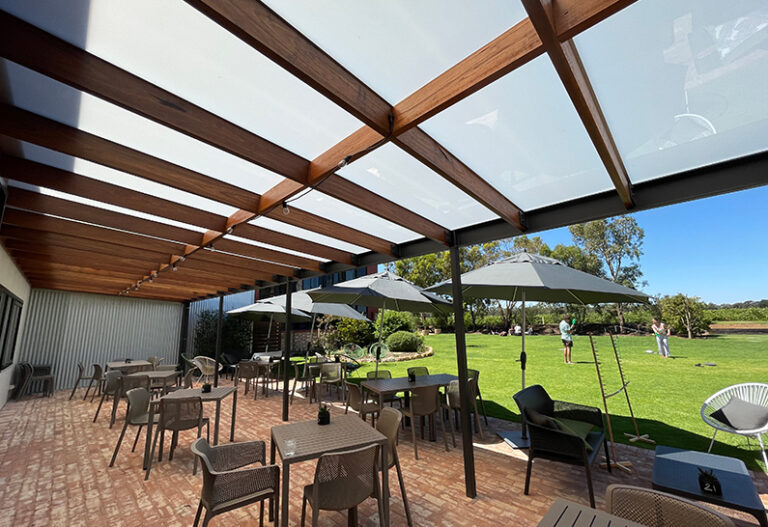
The Sunglaze 4mm Solar Ice is a solid polycarbonate roofing sheet built around the Sunglaze standing seam system. It passes a soft, even 25% of available daylight through a cool ice-white surface, which makes it a strong choice for covered outdoor living where you want natural light without the glare or heat of a fully clear panel. Sheets are sold per metre and cut to length from 1.0m to 9.0m, and they can be delivered Australia-wide or collected from our Truganina trade counter.
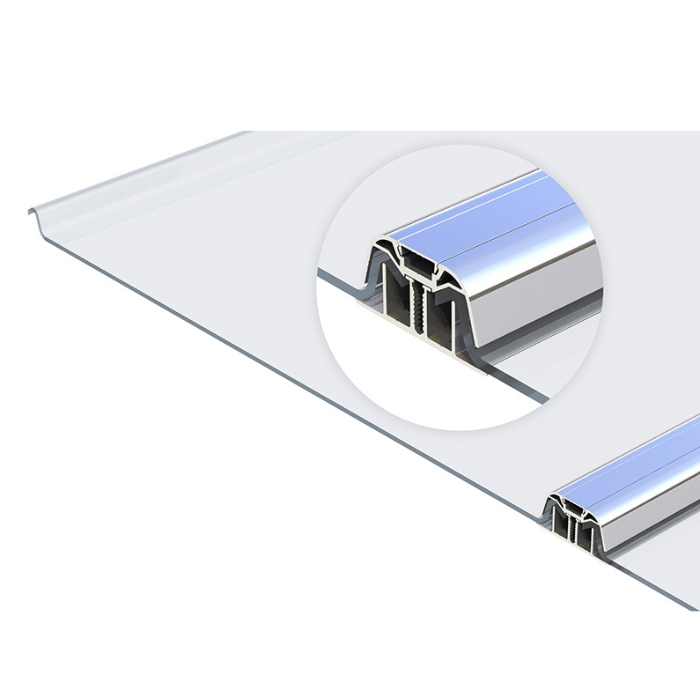
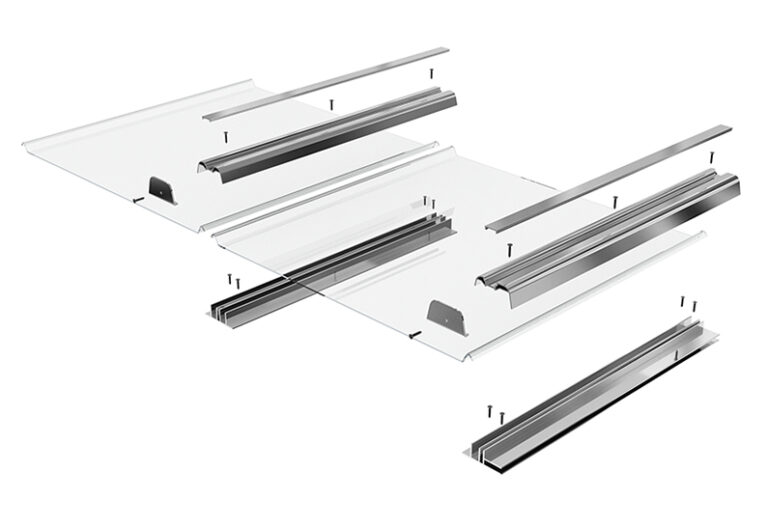
Sunglaze uses a clamp style joining system, so panels are held in place with concealed aluminium joiners rather than screws driven through the sheet. That keeps the top surface clean and removes the most common leak point in a polycarbonate roof. The panel has a solid, glass like surface on both sides, protected by twin surface UV2 coating that blocks 99.99% of UV radiation.
The result is a roof that behaves more like structural glass than a standard corrugated sheet. It suits wide spans, gives a flush architectural finish, and because there are no exposed fasteners it is practical to clean and stays looking sharp for years. For anyone comparing polycarbonate systems, the standing seam approach is worth the extra planning because it removes the rows of screw heads that cheap panels show.
Key Features
- 4mm solid polycarbonate with a sleek, glass like surface on both faces
- 25% light transfer in a soft ice white tone
- Clean panel look: no fixing screws penetrate the sheeting
- Watertight clamp joining system for a hidden, flush finish
- Twin surface UV2 protection blocks 99.99% of UV rays
- Increased insulation against solar heat and sun glare
- Cut to length from 1.0m to 9.0m
- Suitable for flat and curved roof profiles
Specifications
| Material | 4mm solid polycarbonate |
| Light transfer | 25% |
| Colour | Solar Ice (ice white tone) |
| UV protection | Twin surface UV2, 99.99% UV blocking |
| Joining system | Concealed aluminium clamp (Sunglaze standing seam) |
| Length options | 1.0m to 9.0m |
| Sold by | Per metre, cut to length |
Applications
- Pergolas and gazebos
- Verandas and outdoor living areas
- Carports
- Pool and spa covers
- Patio roofs where glare control matters
- Curved roofing on a supporting framework
What You Need To Complete The Job
A Sunglaze roof is a full system, not just a sheet. You will need the Sunglaze 100mm aluminium rafter to carry and clamp the panels, the aluminium base, cap and cover joiners to connect sheet to sheet, and Sunglaze infill foam to seal under the eaves. All the matching parts live in the Sunglaze category, and the wider range of sheets and accessories sits under Polycarbonate Roofing.
Frequently Asked Questions
How is light transfer measured?
Light transfer is the percentage of visible daylight that passes through the sheet. At 25%, Solar Ice lets in a quarter of available light, which reads as a bright but softly lit space rather than the full glare of a clear panel. It suits rooms where you want light as well as shade and reduced heat.
What slope does a Sunglaze roof need?
The Sunglaze system is designed for both rafter and purlin construction, flat or curved, with a recommended minimum roof slope of 5 degrees. For lower slopes, the rafter design is recommended because it gives better drainage control across wide panels.
Do screws go through the sheet?
No. The sheet is held by the aluminium clamp joiners and the rafter channel, so there are no screw holes through the panel. This is what keeps the surface clean and removes the usual leak path around fasteners that you see on a through-fixed polycarbonate roof.
Can the sheet be cut to length?
Yes. This product is sold per metre and cut to length from 1.0m up to 9.0m. Choose your length from the variations on this page. If you need a run longer than 9.0m, contact the store to discuss supply and delivery.
Is the Solar Ice sheet UV protected?
Yes. The sheet carries twin surface UV2 protection that blocks 99.99% of UV radiation. This coating protects the polycarbonate from yellowing and surface degradation over years of Australian sun exposure, which is why the panel keeps its ice white tone.
Technical docs
Polycarbonate Care andMaintenance
Sunglaze 15 Year Warranty
| Standard Length Sizes | 1.0 metre, 1.5 metre, 2.0 metre, 2.5 metre, 3.0 metre, 3.5 metre, 4.0 metre, 4.5 metre, 5.0 metre, 6.0 metre, 7.0 metre, 8.0 metre, 9.0 metre |
|---|
Related Products
Related products
-
 Sunglaze
Sunglaze Side End Caps
-
Sunglaze
Sunglaze Side Cover 6.0m
-
Sunglaze
Sunglaze Side Base 6.0m
-
Sunglaze
SUNGLAZE Clear – 90% Light Transfer