Ask anyone at our Truganina counter and they will tell you this is the question we hear most from patio builders: Laserlite roofing or Colorbond? Both are trusted materials across Australia, but after five Melbourne summers of harsh UV, hail and four-seasons-in-a-day weather, they age in very different ways.
Rather than asking which product is better, the smarter question is how each material performs over time, and which one suits how you actually use your patio, pergola or verandah. This guide is based on what we see across thousands of orders, plus the exact products and fixings that make the difference. You can browse the full Laserlite Roofing Supplies range or Colorbond Roof Sheets range as you compare.
Laserlite Roofing vs. Colorbond: Light Transmission and Summer Heat
The biggest practical difference is daylight. Laserlite is polycarbonate, so natural light filters through. Depending on the tint, light transmission ranges from approximately 16% to 90%. Within the range we stock:
- Laserlite 2000 in Clear or Opal keeps an entertaining area bright and open, while Bronze and Grey Tint soften glare on hot afternoons
- Laserlite 3000 features ComfortCool™ technology, which reflects more radiant heat while still letting visible light through. It is the sheet we recommend most for north and west facing patios
- Laserlite Multiwall adds an insulating air gap, suited to alfresco areas used all year round
Colorbond steel is completely opaque, so it delivers full shade all day. Colorbond Corrugated 0.42 also includes Thermatech® solar reflectance technology, which helps the sheet absorb less heat in summer.
As a quick guide:
- Choose Laserlite if you want natural daylight, a brighter entertaining area and an open outdoor feel
- Choose Colorbond if you want maximum shade, cooler afternoons and extra protection for outdoor furniture
For a wider material comparison, read Glass, Polycarbonate or Fibreglass? Here’s What We Actually See Working at a Melbourne Roofing Supplies Store.
How Do They Hold Up After Five Melbourne Summers?
Yellowing is the worry most customers raise about polycarbonate, and it usually comes from memories of older, unbranded sheets. Modern Laserlite sheets are engineered with Advanced WeatherGuard™ technology and 99.9% UV protection to resist yellowing and hold their clarity. Laserlite 2000 also carries a 10-year warranty against weather breakage, including hail up to 25mm, which matters given Melbourne’s summer storms.
What we genuinely see at year five: branded Laserlite sheets that have been cleaned correctly still look presentable, while cheap no-name polycarbonate is often chalky and brittle by year three.
Colorbond roofing uses BlueScope’s proven five-layer coating system. Rather than yellowing, it experiences slow, gradual colour ageing over many years depending on sun exposure, and the sheet keeps performing structurally throughout.
Homeowners weighing up UV performance can also read Blocking the Burn: How Laserlite Roofing Protects Your Family from UV Rays on Melbourne’s Coastal Decks & Patios.
Rain Noise, Cleaning and Installation Differences
Rain noise is one of the most common buyer questions. Laserlite produces a sharper tapping sound in heavy rain, while Colorbond gives the deeper drum most people associate with steel. In both cases, solid framing and correct fixing spacing reduce noise noticeably.
Cleaning is where the two differ most:
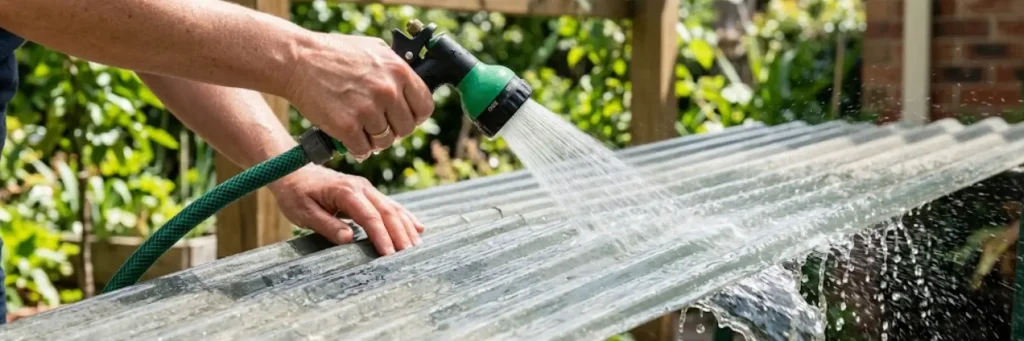
- Laserlite: mild detergent, a soft cloth or sponge, and a low pressure garden hose only. Never use a high pressure cleaner, as it can strip the protective UV surface
- Colorbond: far more forgiving. Water, mild detergent and a soft brush, plus regular leaf removal, keep it looking sharp
If you are installing the roof yourself, these are the tips we give every DIYer at the counter:
- Laserlite 2000 and 3000 both have 760mm effective cover and need a minimum 5 degree roof pitch for proper drainage
- Polycarbonate expands and contracts with temperature, so pre-drill oversized holes, fix on the crest with polycarbonate screws and sealing washers, and never overtighten
- Laserlite needs closer batten spacing than steel, so check the span tables before building the frame
- Colorbond Corrugated 0.48 is a heavier gauge that spans further, ideal for larger patio roofs with fewer supports
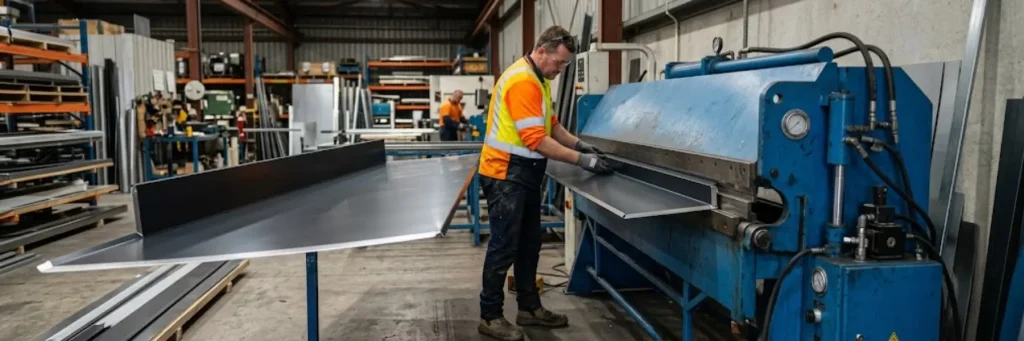
- Never walk directly on polycarbonate sheets, and finish the job neatly with custom flashings, which we fold to size up to 8 metres
Cost Comparison for a Typical 20m² Patio
Prices vary with profile, tint and accessories, but this is a realistic supply-only guide:
| Roofing Material | Approximate Supply Cost per m² | Estimated Material Cost (20m²) |
| Laserlite Roofing | $45-$70 | $900-$1,400 |
| Colorbond Roofing | $30-$55 | $600-$1,100 |
As a live example, our Colorbond Corrugated 0.48 is currently $19.50 per lineal metre, cut to your exact length between 1.2m and 24m, so you only pay for what you need. Budget extra for flashings, roofing screws, delivery and installation.
When a Hybrid Roof Makes Sense
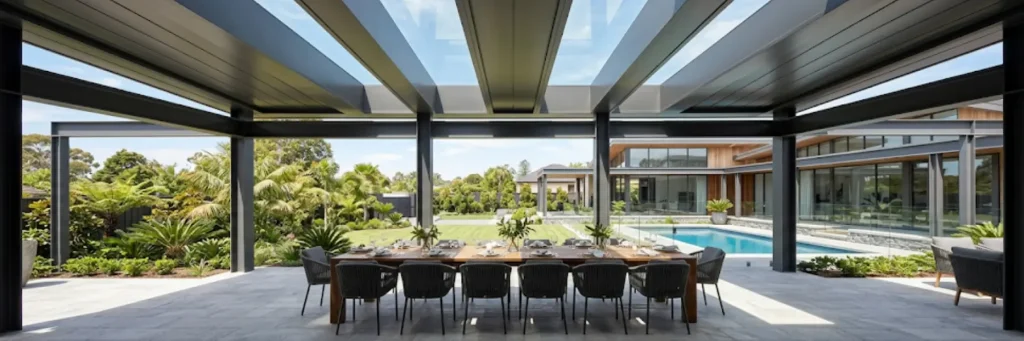
Plenty of customers never choose one or the other. A popular setup is Colorbond across most of the patio with one or two Laserlite skylight strips placed where daylight is wanted, joined neatly with matching flashings.
The result:
- Natural daylight without heat build-up across the whole roof
- Strong shade over the dining or barbecue zone
- Lower maintenance than a fully transparent roof
- A clean, modern appearance
We regularly pack these combination orders for alfresco kitchens and family patios, with sheets, Laserlite bars and flashings supplied together.
Which Roofing Material Is Right for You?
Both perform exceptionally well in the right application.
Laserlite roofing is ideal if your priority is:
- Natural daylight and a bright outdoor living space
- Lightweight sheets that are easier to handle on a DIY job
- Modern UV resistant polycarbonate technology
Colorbond is better suited if your priority is:
- Maximum shade and lower summer heat
- Long term durability with minimal upkeep
- Larger spans and bigger patio structures
For more on steel performance, read How Colorbond Roof Sheets Keep Homes Cooler in Rye, Dromana & Rosebud, or browse more advice on the Singh Roofing Supplies blog.
Still deciding? Visit our Truganina showroom to see Laserlite and Colorbond sheets side by side, or call (03) 9394 1400. Laserlite orders placed before 2pm are ready for pickup or delivery within 1 to 2 days, and custom cut Colorbond is typically delivered within 48 hours across Melbourne.
Frequently Asked Questions
Does Laserlite roofing turn yellow over time?
Premium Laserlite sheets use Advanced WeatherGuard™ technology with 99.9% UV protection to minimise yellowing. Cleaned gently and installed correctly, they hold their clarity well beyond five Melbourne summers.
Can I install Laserlite or Colorbond myself?
Confident DIYers can handle small patio roofs. Use the correct screws, allow for polycarbonate expansion, follow the span tables, and never walk on polycarbonate sheets. Large Colorbond spans are best installed professionally.
Can Laserlite and Colorbond be used together?
Yes. Combining Colorbond roofing with strategically placed Laserlite skylight strips is a popular way to get shade and natural daylight on the same patio, finished with matching flashings.