

HOLESAW H125 BI-MET COBALT M42 54MM (2.1/8) WHITE
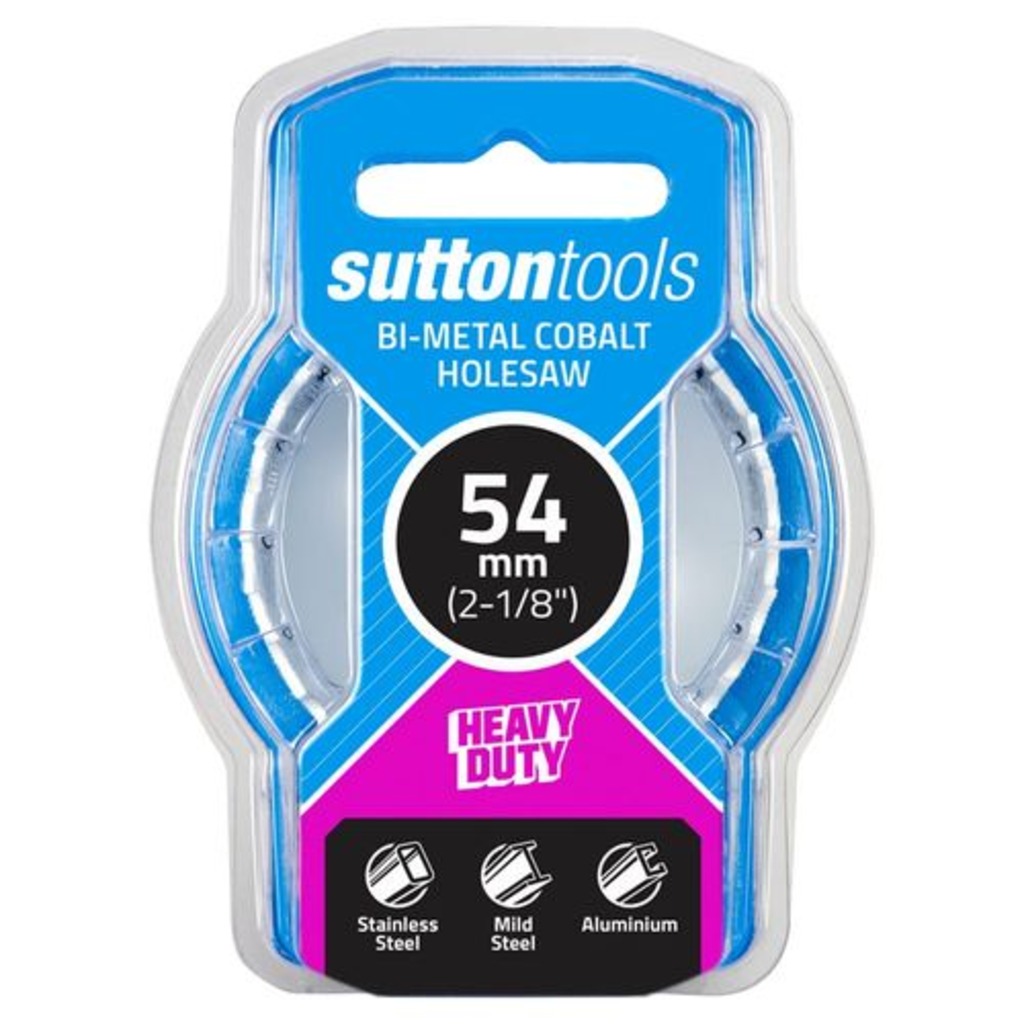
HOLESAW H125 BI-MET COBALT M42 54MM (2.1/8) WHITE
$32.95
Sutton H125 54mm (2 1/8 inch) bi-metal cobalt M42 holesaw, 32mm cutting depth, UA2 or QFX arbor with BD24 or BD26 pilot. For pipe, vent and cable holes in metal, timber and plastic.
SSL Protection
128 Bit SSL Certificate
Quick Shipping
Fast Shipping Australiawide
100% Satisfaction
We Put You First
The Full Kit
More Information
Sutton H125 54mm Bi-Metal Cobalt M42 Holesaw
The Sutton H125 is a 54mm holesaw made from bi-metal cobalt HSS, sized for pipe, vent and cable penetrations that need a clean hole just over 2 inches. It cuts to a 32mm depth and suits machine or hand drilling in steel, stainless steel, cast iron, non-ferrous metals, plastic and wood. The listing places it on the UA2 or QFX arbor with a BD24 or BD26 pilot.
Key Features
- Bi-metal cobalt HSS for toughness and longer life
- 32mm cutting depth
- International thread standard accepts all standard arbors
- Listed for the UA2 or QFX arbor
- Suits machine or hand held drilling
- Cuts steel, stainless steel, cast iron, non-ferrous metals, plastic and wood
Specifications
- Diameter: 54mm (2 1/8 inch)
- Model: H125, white label series
- Material: bi-metal cobalt HSS
- Cutting depth: 32mm
- Thread: international thread standard
- Arbor and pilot: UA2 or QFX arbor, BD24 or BD26 pilot drill
Applications
- Plumbing pipe holes through floors and walls
- Vent and exhaust openings in metal and timber
- Large cable penetrations
- Duct entries through panels
- General fabrication and site work
What You Need To Complete The Job
Mount the saw on a quick fit arbor with a BD26 pilot drill. In metal, keep a cutting lubricant on the cut. For masonry, change to an SDS masonry drill. The wider cutting and fastening range is under Carpentry Tools.
Frequently Asked Questions
What is the 54mm holesaw used for?
A 54mm holesaw is a common choice for plumbing penetrations around 50mm pipe, for vent and grille openings, and for cable entries that sit between the smaller electrical sizes and the big duct sizes. It is a useful all rounder for plumbers and electricians.
Is 54mm a standard plumbing knockout?
It is in the family of sizes used for drainage and vent pipe penetrations, giving a hole that clears a 50mm pipe with a little room to spare. If you are chasing a specific fitting, check the outside diameter of the pipe or duct you are running.
What is the best way to cut sheet metal with this saw?
Mark the centre, start the pilot, and let the rim begin cutting at low speed before feeding normally. Keep the drill square and use a lubricant. Back the saw out to clear swarf on deeper cuts, and ease right off as the teeth break through.
Can this saw cut timber framing?
Yes. It cuts through timber studs, joists and plywood cleanly, which is handy when you are chasing pipe or cable through a floor or wall cavity. Use a steady feed and let the saw do the work; timber cuts much faster than steel.
| Weight | 0.2 kg |
|---|---|
| Dimensions | 8 × 6.5 × 10.5 cm |
Related Products
Related products
-
 Concreting Tools
OX PRO TELESCOPIC BULLFLOAT HANDLE – 1300-2400MM
-
Concreting Tools
OX TRADE 115 X 450MM POINTED FINISHING TROWEL
-
Carpentry Tools
HOLESAW H125 BI-MET COBALT M42 20MM
-
Carpentry Tools
HOLESAW H125 BI-MET COBALT M42 22MM (7/8) WHITE