

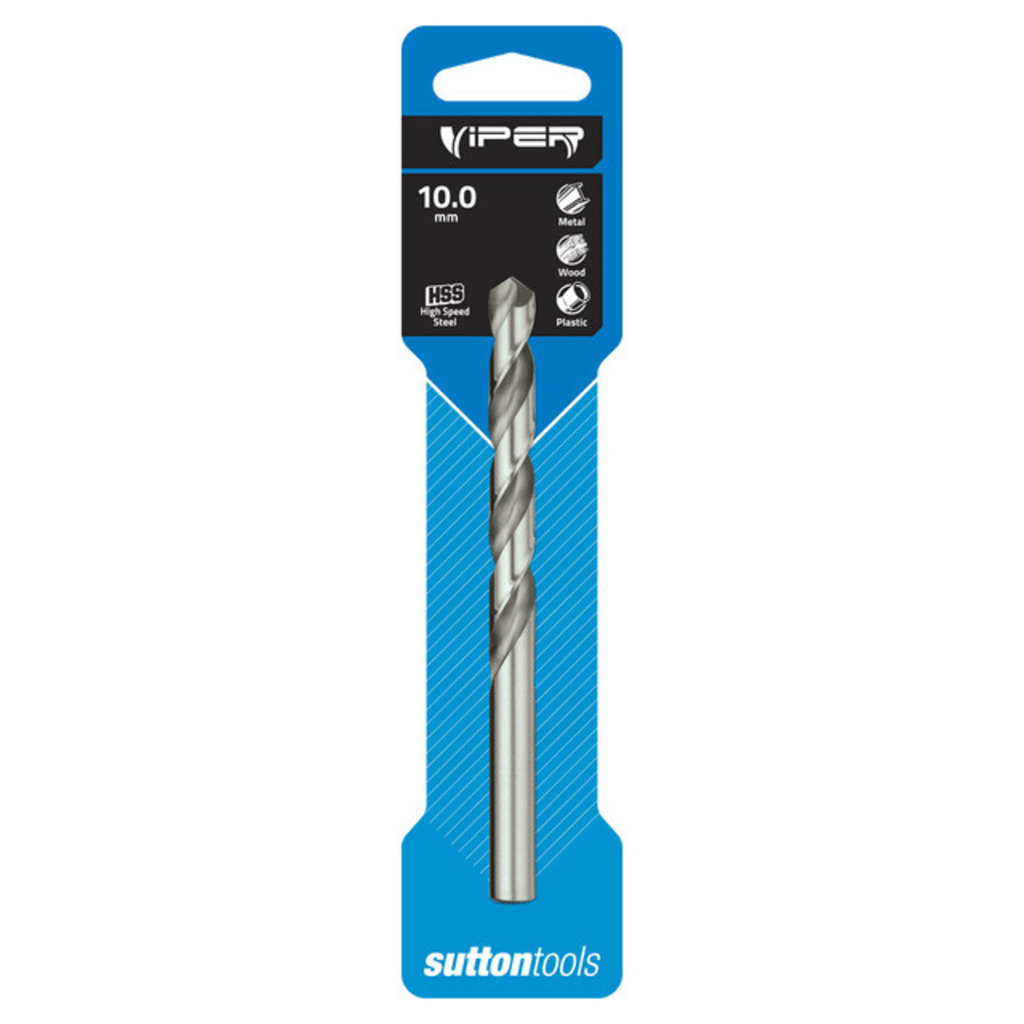
DRILL D105 10.0mm JOBBER Viper DIN338 HSS Carded
DRILL D105 10.0mm JOBBER Viper DIN338 HSS Carded
$15.90
Sutton Viper D105 10.0mm HSS jobber drill bit with a self centering split point for clean starts in steel, aluminium, brass, wood and plastics. Carded single.
SSL Protection
128 Bit SSL Certificate
Quick Shipping
Fast Shipping Australiawide
100% Satisfaction
We Put You First
The Full Kit
More Information
Sutton Viper D105 10.0mm HSS Jobber Drill Bit
The Sutton Viper D105 is a 10.0mm high speed steel jobber drill bit, made to DIN338 dimensions and sold carded as a single bit. Ten millimetre is the big end of everyday drilling: the standard clearance for M10 bolts and the pilot size for the largest common fixings. The Viper point is a 118 degree split point that self centers on the mark, starts without walking, and cuts up to 2 times faster than a conventional HSS bit with less pressure on the drill.
Key Features
- Viper point design delivers up to 2 times faster drilling than conventional HSS bits
- 118 degree self centering split point
- DIN338 HSS jobber geometry in a 10.0mm diameter
- Reduced drilling pressure for better control
- Suits machine and hand held drilling
- Carded single bit for the toolbox
Specifications
- Diameter: 10.0mm
- Type: HSS jobber drill bit, DIN338
- Model: D105
- Point: 118 degree split point, self centering
- Materials: steel, aluminium, brass, wood and plastics
Applications
- Clearance holes for M10 bolts and screws
- Pilot holes for M12 and M16 fixings
- Drilling steel, aluminium and brass
- Heavy timber and plastic work
What You Need To Complete The Job
A 10.0mm bit needs a drill with serious torque, so reach for a corded drill or a high output cordless. For masonry, switch to an SDS masonry drill, and for holes above this size use a pilot drill as the next step. The rest of the fastening range is in General Hand Tools.
Frequently Asked Questions
Why is this called a jobber drill bit?
Jobber is the standard length for a general purpose twist drill bit, the middle length between the short and long series. It is the most common HSS drill format, sized to suit most drilling jobs without the flex of a long bit or the short reach of a stubby.
What is a 10mm drill bit used for?
A 10mm HSS bit is the standard clearance for M10 bolts and a common pilot for larger fixings like M12 studding. It is a core size for structural steel, brackets and heavy fabrication work.
What speed should I use for a 10mm bit in steel?
Run it at a moderate speed with a firm feed and plenty of cutting oil. At 10mm the bit has real mass, so it cuts smoothly at a slower spindle speed than smaller bits; forcing it fast just burns the edge.
Can this bit drill through thick steel plate?
Yes. For plate steel, drill a smaller pilot first, then open it out with the 10mm bit. Use lubricant and a steady feed, and let the bit do the cutting rather than leaning on the drill.
Is 10mm suitable for timber framing?
Yes, it clears holes in timber for M10 bolts and coach screws. Drill with a steady feed and clear the sawdust regularly so the bit does not burn the wood.
| Weight | 0.1 kg |
|---|---|
| Dimensions | 4.5 × 1.0 × 19.5 cm |
Related Products
Related products
-
 General Hand Tools
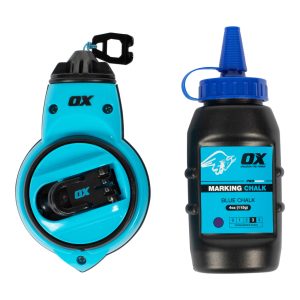
OX PRO CHALK REEL/CHALK BUNDLE
-
General Hand Tools
OX TRADE YELLOW LINE MARKING CHALK – 8OZ / 226G
-
General Hand Tools
OX Trade Blue Spot Marking Paint
-
General Hand Tools
DURUM 1/4-Hex to 1/4-Drive Socket Adaptor Bit