If you have ever driven across Melbourne with a sheet of polycarbonate that turned out to be the wrong type, the wrong thickness, or simply 200 mm too long for your pergola frame, you will know exactly how frustrating that second trip feels.
Polycarbonate sheets in Melbourne are a go-to roofing choice for pergolas, patios, carports, and skylights, and rightly so. But with solid, twinwall, and corrugated profiles available in half a dozen thicknesses and tints, buying blind is a costly gamble. This guide walks you through every decision point so you arrive at the counter knowing exactly what to ask for.
1. Which Type of Polycarbonate Sheet Do You Actually Need?
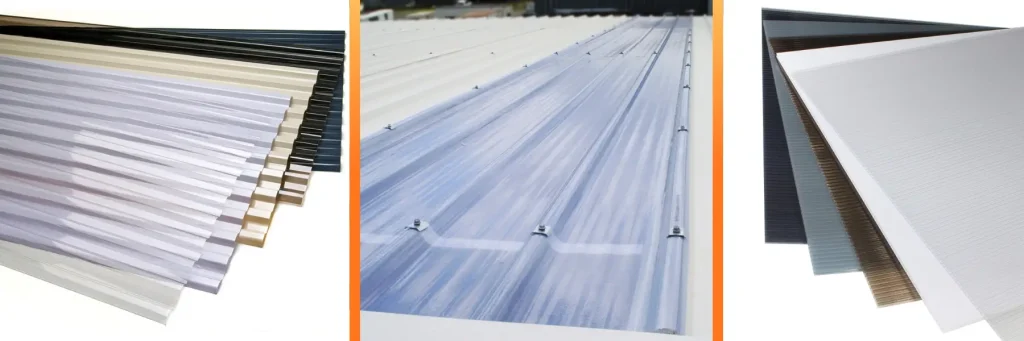
There are three main profiles on the market, and each one suits a different job. Getting this right before anything else will save you time, money, and guesswork.
Corrugated Polycarbonate
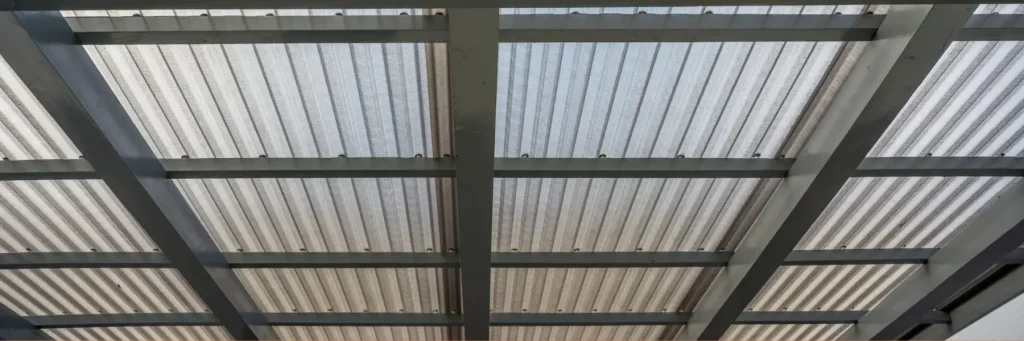
- Matches the profile of standard corrugated metal roofing, making it ideal for blending natural light into an existing Colorbond roof.
- Suited to pergolas, verandahs, carports, and shed roofing.
- The most budget-friendly option and the easiest for a confident DIYer to cut and install.
- Products to look at: Laserlite 2000 (available in corrugated, greca, and trimdeck profiles in clear, bronze, cream, and grey tint) and the Suntuf BH (Beehive), which is three times thicker than standard corrugated sheet and produces 100% diffused light, perfect for pergolas and covered walkways where glare control matters.
Twinwall (Multiwall) Polycarbonate
- Hollow-channel construction that traps air between two layers, giving it far better thermal insulation than a solid sheet.
- The right call for skylights, sunrooms, and any application where you want natural light without significant heat gain.
- Translucent rather than fully transparent, so it softens light beautifully without harsh glare.
- Products to look at: The Sunglaze system from Singh Roofing Supplies is an architectural-grade standing seam multiwall panel engineered for wide spans, pitched roof glazing, and hail-resistant skylights. It is a genuinely strong alternative to glass roof systems.
Solid Polycarbonate
- Fully transparent, like glass, but up to 250 times more impact resistant.
- Best for frameless enclosures, balustrades, windbreaks, and pool fencing where clarity is critical.
- Heavier and pricier than corrugated, but worth it when aesthetics and strength both matter.
Not sure which profile suits your project? Browse the full polycarbonate sheet range at Singh Roofing Supplies for specs, dimensions, and available colours before you order.
2. UV and Heat Protection: Why It Matters Specifically in Melbourne
Do not underestimate what the Melbourne summer actually puts your roofing through.
According to the Bureau of Meteorology, the UV index across Australia peaks at 11 or above in January under clear skies, placing it in the “Extreme” category. (Bureau of Meteorology, UV Climate Maps, accessed April 2026). Even in Melbourne, which sits further south than Sydney or Brisbane, summers are brutal. The 2024-25 summer recorded a mean maximum temperature of 28.7°C across Victoria, roughly 2°C above the long-term average.
Unprotected polycarbonate yellows, becomes brittle, and loses light transmission over time when exposed to sustained UV radiation. Here is what to look for on the product label:
- Co-extruded UV protective coating: This is baked into the surface of the sheet during manufacture, not simply applied as a film. Laserlite products at Singh Roofing Supplies carry Comfort Cool and Advanced Weather Guard technology, which meet AS/NZS 4257.4 standards for long-term light transmission performance.
- Bronze and grey tints: These reduce solar heat gain compared to clear sheets, a practical choice for a west-facing pergola roof in Melbourne.
- SHGC (Solar Heat Gain Coefficient): The lower the number, the less heat enters the space below. The Palram Cooltop range is specifically engineered to minimise heat build-up in the panel itself.
If you are installing over a living area or an outdoor room you actually want to spend time in during summer, UV-grade sheet is not a luxury. It is the baseline.
3. Thickness Guide: Matching mm to Application
This is where many DIYers second-guess themselves. Here is a straightforward reference:
| Thickness | Best Application |
| 3 mm corrugated | Basic carport or shed infill panel |
| 4 mm corrugated / solid | Patio cover, small pergola, lean-to |
| 6 mm twinwall | Standard skylight, sunroom roof |
| 8 mm twinwall | Larger skylight spans, commercial applications |
| 10 mm+ twinwall or solid | Structural glazing, wide-span pergola roofing, hail-prone areas |
A few practical rules of thumb:
- For a freestanding pergola in suburban Melbourne, 4 mm corrugated polycarbonate handles most residential spans when installed with the correct purlin spacing (typically 600-900 mm centres).
- If your rafters or purlins are further apart than 900 mm, step up to 6 mm minimum to avoid mid-span deflection.
- For a skylight or overhead structure where hail impact is a concern, look at the Suntuf BH Beehive panels, which offer the highest impact resistance of any profiled polycarbonate sheet currently on the market.
When in doubt, call the team at Singh Roofing Supplies with your rafter spacing and span length. They will recommend the right thickness on the spot.
4. Cost Comparison: Polycarbonate vs Glass vs Acrylic in Melbourne
This is the table most buyers are looking for. The prices below are approximate guide figures for the Melbourne market and will vary by brand, thickness, and supplier. Always get a confirmed quote before ordering.
| Material | Approx. Cost per m² (AUD) | Impact Resistance | UV Protection | DIY-Friendly |
| Corrugated polycarbonate | $20 – $45 | Excellent | Grade-dependent | Yes |
| Twinwall polycarbonate | $35 – $70 | Very Good | Grade-dependent | Yes |
| Tempered glass | $80 – $200+ | Poor (shatters) | Limited | No |
| Acrylic (Perspex) | $25 – $55 | Moderate | Good | Moderate |
A few things this table does not capture:
- Installation cost: Glass requires specialist framing and labour. Polycarbonate is lightweight (around 50% lighter than glass) and can be cut on-site with standard tools, which dramatically reduces installation time and trade costs.
- Long-term durability: A UV-grade polycarbonate sheet from a reputable brand should retain its clarity and structural integrity for 15-plus years. Budget acrylic can yellow and crack significantly sooner.
- Replacement cost: If a hailstorm hits (and Melbourne does see them), a polycarbonate sheet is a fraction of the cost and effort to replace compared to glass.
5. Where and How to Buy Cut-to-Size Polycarbonate Sheets in Melbourne
This is where your prep pays off. Here is what to ask when you call or walk in:
- Do you cut to size on the day? Singh Roofing Supplies stocks polycarbonate sheets in lengths from 1.8 m to 7.2 m and can assist with specific project requirements, so call ahead on (03) 9394 1400 to confirm availability and lead time for your chosen profile.
- What profiles are in stock today? Corrugated, greca, trimdeck, and multiwall profiles can vary in stock levels, particularly in peak renovation season (spring and early summer in Victoria).
- Is same-day or next-day delivery available in my suburb? Singh Roofing Supplies offers same-day or next-day delivery for Melbourne metro orders and serves customers across Victoria from their Truganina warehouse at 2/1 Network Drive, Truganina VIC 3029.
- Can you match my existing Colorbond roofing profile? Bring a photo or note the Colorbond profile name (corrugated, trimdeck, etc.) so your polycarbonate sheet sits flush against your metal sheeting.
- Do you stock accessories? Flashings, foam closure strips, and UV-stable screws make the difference between a professional finish and a leaking pergola. A good supplier will have the complete accessory kit, not just the sheets.
Practical Tips Before You Measure and Buy
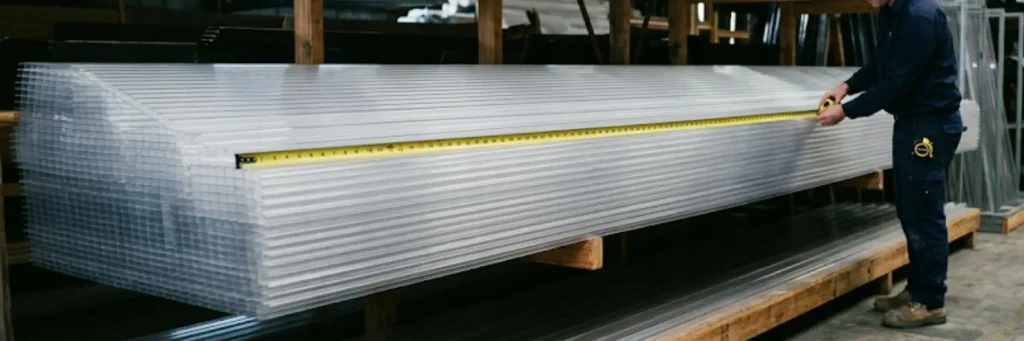
- Measure your rafter-to-rafter width and add 50 mm overhang on each side as a minimum.
- Always measure twice. A cut-to-size sheet cannot be returned once trimmed.
- Store your sheets flat on a pallet if they are delivered ahead of your install date. Do not stand them vertically for extended periods.
- Install with the UV-coated side facing upward (usually marked with a protective film or label).
For a full overview of polycarbonate systems and how they compare to other roofing options, the What is Polycarbonate Roofing guide on the Singh Roofing Supplies blog is worth a read before you finalise your product selection. h
Ready to Order Your Polycarbonate Sheets?
Skip the second trip. Contact the Singh Roofing Supplies team or visit us at 2/1 Network Drive, Truganina to get your sheets cut to size and ready to go, same day. Shop now!
Frequently Asked Questions with Polycarbonate Sheets Melbourne
1. Can I cut polycarbonate sheets to size myself at home?
Yes. A fine-toothed circular saw or jigsaw works well. Score and snap is suitable for thinner solid sheets. Always wear eye protection and seal cut edges with UV-stable tape.
2. How long do polycarbonate sheets last in Melbourne’s climate?
UV-protected polycarbonate from reputable brands like Laserlite typically maintains performance for 15 or more years under Australian conditions, significantly outperforming basic acrylic in UV stability.
3. What is the difference between corrugated and twinwall polycarbonate for a pergola?
Corrugated is lighter, cheaper, and easier to install with standard roofing screws. Twinwall offers better thermal insulation, making it preferable if the space below gets direct afternoon sun.