
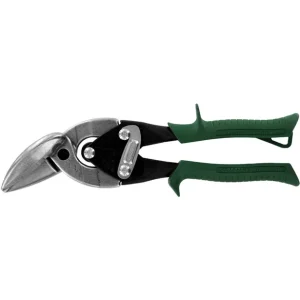


MIDWEST Right Aviation Upright Tinsnip
MIDWEST Right Aviation Upright Tinsnip
$89.50
Midwest right cut aviation upright tinsnip for straight and tight curve cutting in sheet metal. Serrated top blade with 40 serrations per inch, ergonomic handle.
SSL Protection
128 Bit SSL Certificate
Quick Shipping
Fast Shipping Australiawide
100% Satisfaction
We Put You First
The Full Kit
More Information
Midwest Right Cut Aviation Upright Tinsnip
The Midwest right aviation upright tinsnip cuts straight lines and tight curves in sheet metal, with the blades able to be used up or down in a push or pull motion. The upright handle design supports a natural wrist position and makes the snip easy to use in confined areas. A serrated top blade grips the metal as it cuts, giving a cleaner line with less slipping.
Key Features
- Cuts straight lines and tight curves, circles and shapes in sheet metal
- Serrated top blade with 40 serrations per inch for a firm grip on the metal
- Use with blades up or blades down, in a push or pull motion
- Upright handle design improves wrist range of motion
- Ideal for working in confined areas
- Ergonomic design for comfort during extended cutting
Specifications
- Cut direction: right
- Nominal length: 8-3/4 inch
- Cut length: 1-1/4 inch
- Cutting capacity (cold rolled steel / stainless steel): 24 / 28 gauge (description-sourced)
- Top blade: serrated, 40 serrations per inch
- Handedness: easiest used in the right hand
Applications
- Cutting flashing, capping and trim in metal roofing
- Following curves around corners and downpipe openings
- Trimming gutters and custom metalwork in tight spots
- Ductwork and general sheet metal fabrication
What You Need To Complete The Job
Use this right cut snip with the Midwest left cut upright tinsnip to cover curves in both directions, and protect your hands with leather rigger gloves. Add clear safety glasses for metal fragments. Browse the full General Hand Tools range for more cutting tools.
Frequently Asked Questions
What is a right cut tinsnip used for?
A right cut tinsnip follows tight curves to the right when used in the right hand, and it also handles straight cuts. Roofers and sheet metal workers use it to cut around corners, downpipe openings and irregular shapes in flashing and guttering, where a straight snip cannot follow the line.
How do I know which hand the snip is for?
The listing notes this snip is easiest used in the right hand. The blade geometry and the handle are set up for a right handed user to get the natural cutting action. For a left handed user, the opposite cut direction may feel more comfortable.
Does the serrated blade make a difference?
Yes. The serrated top blade grips the sheet metal as it cuts, which stops the metal from sliding out from between the jaws and reduces the chance of the cut wandering. It also helps the snip bite through the metal with less effort.
How do I cut a clean line with an upright tinsnip?
Mark the line you want to cut, then open the jaws and place the blades on the mark. Squeeze the handles and work along the line in short, even cuts rather than one long squeeze. Use the blades up or down and a push or pull motion, whichever gives you the most control for the shape you are cutting.
Brochure
MIDWEST Brochure
| Weight | 0.431 kg |
|---|---|
| Dimensions | 22.2 cm |
Related Products
Related products
-
 General Hand Tools
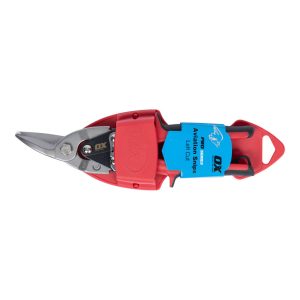
OX PRO AVIATION SNIPS WITH HOLSTER – LEFT CUT (RED)
-
Carpentry Tools
OX PRO 305MM COMBINATION SQUARE
-
General Hand Tools
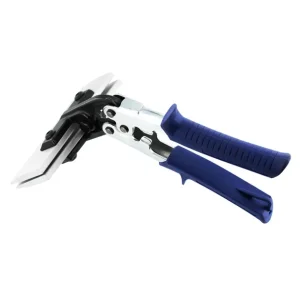
Seamer Offset 5 Midwest
-
Sale!Metal Roofing Tools
MIDWEST 250mm Right Offset Aviation Tin Snip