

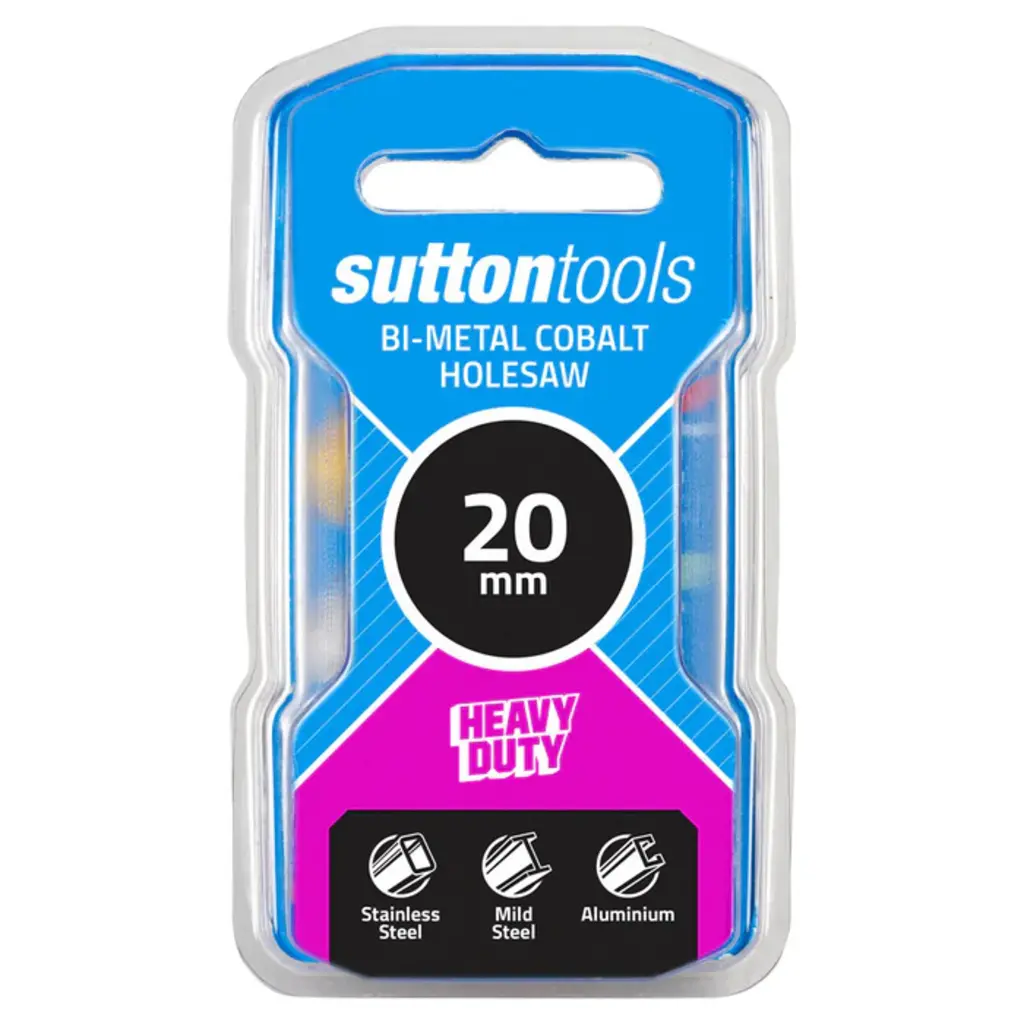
HOLESAW H125 BI-MET COBALT M42 20MM
HOLESAW H125 BI-MET COBALT M42 20MM
$15.95
Sutton H125 20mm bi-metal cobalt M42 holesaw with a 32mm cutting depth and an international thread for standard arbors. For steel, stainless, cast iron, non-ferrous metals, plastic and wood.
SSL Protection
128 Bit SSL Certificate
Quick Shipping
Fast Shipping Australiawide
100% Satisfaction
We Put You First
The Full Kit
More Information
Sutton H125 20mm Bi-Metal Cobalt M42 Holesaw
The Sutton H125 is a 20mm holesaw built from bi-metal cobalt HSS, the combination Sutton uses for a hard cutting edge that keeps its temper on longer jobs. It drills to a 32mm depth and works in steel, stainless steel, cast iron, non-ferrous metals, plastic and wood, by machine or by hand. Because the thread is cut to the international standard, the saw accepts the standard quick fit arbors sold across the Sutton range.
Key Features
- Bi-metal cobalt HSS for toughness and longer life
- 32mm cutting depth for sheet, plate and panel work
- International thread standard accepts all standard arbors
- Suits machine or hand held drilling
- Cuts steel, stainless steel, cast iron, non-ferrous metals, plastic and wood
- Trade and industrial quality build
Specifications
- Diameter: 20mm
- Model: H125
- Material: bi-metal cobalt HSS
- Cutting depth: 32mm
- Thread: international thread standard
- Pilot: BD24 or BD26 pilot drill
Applications
- Clean holes in sheet metal and light plate
- Conduit and cable penetrations through steel panels
- Electrical box and switch cutouts in metal
- Timber, plywood and plastic panels
- Cabinet and joinery work on site
What You Need To Complete The Job
Fit the saw to an quick fit arbor with a BD26 pilot drill in the centre, then run the assembly in a drill with enough torque to hold the cut. For masonry work, swap to an SDS masonry drill. Browse the Carpentry Tools range for the rest of the kit.
Frequently Asked Questions
What is a 20mm holesaw used for?
A 20mm holesaw is a common size for electrical and data cabling, where a 20mm knockout is the standard entry for conduit and cable through steel panels and junction boxes. It also handles timber and plastic panels cleanly, which makes it a useful all rounder in a sparkie or carpenter kit.
Do I need cutting fluid?
On mild steel, a little cutting oil keeps the bi-metal teeth cool and makes the cut smoother. On stainless steel, a lubricant is more important still, because stainless work hardens if the edge rubs instead of cutting. On timber, plastic and non-ferrous metal, you can usually cut dry.
Why does the pilot matter so much?
The pilot drill holds the saw on the centre mark while the rim teeth do the cutting. If the pilot is blunt or missing, the saw wanders and cuts an oversized, rough hole. A sharp BD24 or BD26 pilot keeps the saw tracking true from start to finish.
Can this saw cut through the back of a panel cleanly?
Yes, with the right technique. Feed steadily and ease the pressure as the teeth break through the far side so the saw does not grab. Cutting from the finished face and backing up the work where you can gives the cleanest exit edge.
| Weight | 0.07 kg |
|---|---|
| Dimensions | 6 × 4 × 10.5 cm |
Related Products
Related products
-
 Carpentry Tools
HOLESAW H125 BI-MET COBALT M42 22MM (7/8) WHITE
-
Carpentry Tools
HOLESAW H125 BI-MET COBALT M42 51MM (2INCH) WHITE
-
Carpentry Tools
Recipro Blade set H589 5pcs Metal Cutting
-
Carpentry Tools
PILOT DRILL H112 BD24 HSS 6.35 x 82MM 1PK