When you consider protecting your house against the weather, you likely think of roof tiles, gutters or even your cladding’s paint first. But hidden away in the detail of your construction is a tiny but vital part that quietly protects your house from leaks and damage long term: Z flashing. It isn’t necessarily something you’d notice daily, but without it, water will find its way into gaps and crevices that leave your house exposed.
For Australian houses whether on the coast, in the tropics or in the interior where the weather becomes severe, Z flashing isn’t merely a useful addition, it’s necessary.
What Exactly Is Z-Flashing?
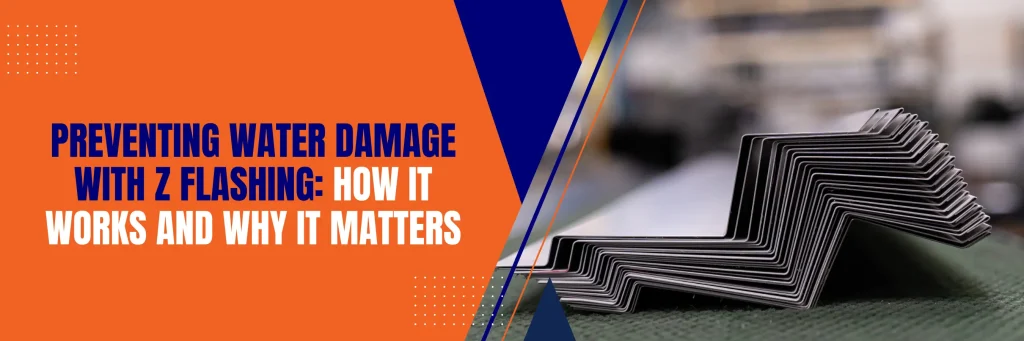
Z flashing gets its name from its distinctive profile. Shaped like the letter “Z”, it is a strip of metal or durable material designed to sit between two surfaces, usually in cladding or siding systems, as well as roofing elements. The Z shape creates a barrier that directs water away from joints and gaps, allowing moisture to run off rather than seep inside.
You’ll typically find Z flashing installed:
- Between boards or panels of horizontal siding
- At transitions of the roof to the wall
- Above windows and doors of cladding systems
Its clever design means that the top piece of material overlaps neatly over the flashing, and the bottom piece sits underneath it, with no path for water to enter.
Why Z Flashing is Important for Australian Homes
Australia’s climate is extreme. Severe rain, intense UV radiation, strong winds and salt-laden coastal air all stress homes. Without flashing, even minor water ingress can find its way into your walls or beneath roofing components. Over time, this causes issues such as:
Rotting timber: As soon as moisture is contained within walls, framing and sheathing are short-lived.
Mould and mildew: Moisture fosters the growth of mould, which not only damages buildings but also contaminates indoor air.
Structural damage: Consistent exposure to water weakens vital aspects of your home, leading to costly repairs.
Reduced insulation function: Moisture breaks down insulation, making your home less effective.
Z flashing prevents all of this dead in its tracks by providing a sure-fire, physical barrier that deflects moisture. Basically, it safeguards both your home’s exterior and its underlying structural elements.
How Z Flashing Functions with Siding
Cladding systems are particularly vulnerable to water penetration, since they entail overlapping boards or panels. Without flashing, the joint between each one is an easy point for rain to penetrate.
It’s here that Z flashing does the bulk of the work. It’s put in place at each horizontal joint, spanning the gap so that:
- Water that flows down the top board is halted by the flashing.
- The Z shape forces water out and above the lower board.
- The lower board overlaps underneath the flashing, safeguarding against water intrusion.
It’s a very straightforward but highly effective system that significantly prolongs the lifespan of your siding and renders your wall cavity dry.
The Function of Z Flashing in Roofing
Z flashing also serves a protective function in roofing applications. For instance, where a vertical wall intersects a roof plane, Z flashing can be used to redirect water away from the intersection. It is also utilized around parapets, dormers and other architectural elements.
Since roofing systems are intended to drain water rapidly, every gap or weak spot is a liability. Z flashing makes certain that all the weak spots are sealed in a manner that is compatible with the natural flow of rainwater.
Material Selection
All flashing isn’t created the same, and material selection is particularly vital in Australia, where conditions change radically. Some common materials for use with Z flashing are:
Galvanised steel: Durable and cost-effective, with a zinc coating that prevents corrosion.
Aluminium: Corrosion-resistant, lightweight and simple to fabricate.
Copper: Extremely long-lasting and forms a patina over time, but at a greater expense.
Lead-free options: Versatile, environmentally friendly options for specialized applications.
Your selection should consider local weather, coastal proximity and the length of time you wish the flashing to last before requiring replacement. For houses in coastal locations, corrosion resistance is not negotiable.
Typical Problems Without Z Flashing
If you omit Z flashing or incorrectly install it, you’ll quickly develop signs of issues. Look out for:
- Water marks on walls or ceilings
- Swelling or warping of timber cladding
- Mould patches are visible inside buildings
- Peeling paint or bubbling finishes on the outside surfaces
These are warning signs that water has penetrated to the inside. Fixing the flashing upfront avoids much larger and costlier, repairs down the road.
Insider Tips for Making Z Flashing Work
Tie it into your siding or roof system: The size and profile need to fit tightly with your tiles or cladding.
Select the proper gauge: Heavier materials tend to endure longer and withstand damage.
Professional installation matters: Even top-notch flashing will not work if it isn’t installed with the right overlaps, fasteners and sealants.
Maintenance is important: Check flashing from time to time to make sure it hasn’t been raised, rusted or weathered.
Why You Shouldn’t Ignore Z Flashing
Think of Z flashing as your home’s invisible raincoat seam. It may not be obvious to the eye, but it is the part that stops water from sneaking through. In a country where the weather can turn fierce without warning, overlooking it is a risk no homeowner should take. Whether you’re building new, re-cladding, or repairing an existing roof, Z flashing is a detail that pays off with years of reliable protection.
Conclusion
Taking care of your house involves noticing the most important little things. Z flashing may not be the most noticeable aspect of your roof or siding, but it is crucial in making sure your house stays dry, safe and intact.
If you’re in the market for quality Z flashing designed for the Australian climate, Singh Roofing Supplies is here to assist you. We have resistant solutions suited for use on roofs and for siding, and the expertise to assist you in selecting the best product to accomplish your goals. It’s just a small step to keeping your house safe for years to come.